
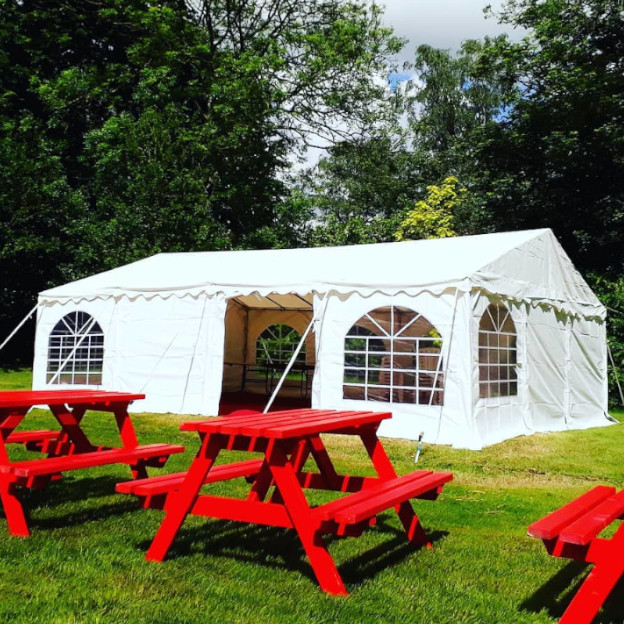
← All guides · Buying & specs · 6 min read
Two marquees can share a size, a photo and a description and still be completely different products. A 6x12m that costs a few hundred pounds and one that costs a couple of thousand are built for different jobs. Neither is wrong, but you should know which one you are buying. These are the seven things we would check, whoever you buy from.
1. What the covers are made of: PVC or PE
This is the biggest difference, and listings often leave it vague.
- PE (polyethylene) is the woven, crinkly plastic used on most budget party tents, usually about 180gsm and sometimes up to around 240gsm. It is light and cheap, but it can let water through at the seams, it fades and goes brittle in sunlight, and it tears easily in wind. It suits a dry summer afternoon.
- PVC is a coated fabric. It is heavier, fully waterproof, and lasts for years. It is what professional marquees use.
Check that the roof and the sides are PVC. Some listings say “PVC” when only the roof is. Ask whether the covers are fire retardant, and to which standard. Ours are to BS 5438 and BS 7837. There is more on this in Marquee vs Gazebo: why the price difference matters.
2. What the gsm figure really tells you
gsm (grams per square metre) is the weight of the fabric. More is usually stronger, but only when you compare like with like: a 500gsm PVC is a very different thing from a 180gsm PE.
- About 380gsm PVC: lighter and easier to handle. Fine for occasional use.
- About 500gsm PVC: the commercial standard. Strong enough for regular use and hire.
- About 650gsm PVC: heavy duty, for long stand-ups and the toughest sites.
Weight isn’t the same as strength. Two 500gsm PVCs can perform very differently, because the base fabric, the coating and how the seams are welded all matter. The figure that tells you how strong a cover is, is its tensile strength, measured in newtons (N).
Watch out for labels like “PVC700” or “PVC900”. They aren’t a weight in gsm and they aren’t an industry standard, which makes it very hard to compare like with like. Our 500gsm PVC has a tensile strength of 1707N, so with that kind of labelling it could be called “PVC1700”. Our 650gsm is 1843N, which others might call “PVC1850” or higher. Ask any seller for the gsm and the tensile strength in N.
We explain more in The great PVC weight debate: why 550gsm might not be what you think.
3. The frame: tube size, wall thickness and finish
The frame decides how the marquee copes with wind.
- Tube diameter: budget party tents usually use smaller, thinner tube. Our standard frames use 38mm and 42mm tube, and the Deluxe uses 50mm and 54mm.
- Check what “50mm” really means: some sellers call a marquee “50mm” when only the legs are 50mm and the roof poles, purlins and ground bars are 38mm. On our 50/54mm marquees every pole is 50mm (legs, roof poles, purlins and ground bars), all joined with 54mm connectors. That makes the whole structure much heavier and stronger. Ask what size every pole is, not just the legs. More in Not all 50mm/54mm marquee frames are created equal.
- Wall thickness: two tubes of the same diameter can have very different walls, and a thin wall bends where a thicker one doesn’t. Our tubes have a 1.3mm wall; cheap frames are often around 0.8mm. Ask for the wall thickness, not just the diameter.
- Finish: galvanised steel resists rust far better than painted or powder-coated steel, which chips at the joints.
4. Bracing: ground bars, eaves braces and gable uprights
These parts are what make a marquee a rigid box rather than a set of poles. Many cheaper marquees leave some or all of them out.
- Ground bars join the feet of the legs, so the frame can’t spread or twist.
- Eaves braces stiffen the joint between each leg and the roof.
- Gable uprights support the end walls against wind. See why gable uprights are a game-changer.
Ask which of the three are included, and which are extra.
5. The details you only notice when putting it up
- Connectors: look for ones with stops punched into them, so poles go in to the right depth and don’t jam. (Why our connectors have punched stops.)
- Roof purlins: these run the length of the roof and hold the cover up. More purlins support the roof better, so rain doesn’t pool. All our 6m wide marquees have 5; our 3m wide marquees, and the 4m Classic and Premium, have 3. On a 6m wide marquee, look for 5. (Why 5 purlins make all the difference.)
- How the covers attach: bungees and eyelets along every edge hold the PVC taut and stop it flapping.
- Side panels: check whether you can swap windows, plain walls and doors around, and whether there is a rain skirt along the bottom.
6. Spare parts and warranty
Something will eventually bend or tear, especially if the marquee is used often. Before you buy, check that you can order every part on its own: a single pole, a connector, one side panel. If the seller doesn’t sell spares, one bent pole can mean a new marquee. Check the warranty length and what it covers. Ours is 12 months, and we sell every part separately.
7. Who you are buying from
- Is there a UK phone number, and does someone answer it?
- Are there set-up instructions and videos?
- Is delivery included, and how long does it take?
- Can you see the marquee before you buy, or speak to someone who has put one up?
We have been making and selling marquees since 1983. You’re welcome to visit us in Dorking to see a marquee up, look at the frame parts and covers close up, and talk to people who have used these marquees in the commercial hire trade for over 30 years. Or call us on 01306 876767.
At a glance: the main types of marquee
| Budget party tent | Classic | Commercial | Deluxe | |
|---|---|---|---|---|
| Covers | PE, usually about 180gsm (some up to around 240gsm) | 500gsm roof, 380gsm sides PVC | 500gsm PVC | 650gsm PVC |
| Frame | Smaller, thinner tube, often painted | 38/42mm galvanised steel | 38/42mm galvanised steel | 50/54mm galvanised steel, every pole 50mm |
| Tube wall | Often around 0.8mm | 1.3mm | 1.3mm | 1.3mm |
| Cover strength | Rarely stated | 1707N roof (500gsm) | 1707N | 1843N |
| Roof purlins (6m wide) | Often 3 or fewer | 5 | 5 | 5 |
| Ground bars, eaves braces, gable uprights | Usually none | Optional | Included | Included, plus leg braces |
| Waterproof | Not reliably | Yes | Yes | Yes |
| Spares sold separately | Rarely | Yes | Yes | Yes |
| Best for | A dry day or two, once or twice a year | Occasional events | Regular use and hire | Long stand-ups and exposed sites |
For the full comparison of our own ranges, see Classic vs Commercial vs Deluxe: which marquee range do you need?
When a cheaper party tent is the right choice
If you need cover for a single summer afternoon, in a sheltered garden, and you’ll take it down if the wind picks up, a budget party tent can be fine. It is the wrong choice if the marquee will stay up overnight, be used every year, stand in an exposed spot, or be hired out to other people. Hire companies weighing this up should read PVC vs polyethylene for a hire fleet.
Quick questions to ask any seller
- Are the roof and sides PVC? What gsm, and what tensile strength in newtons?
- What size is every pole (not just the legs), how thick is the tube wall, and is it galvanised?
- Which are included: ground bars, eaves braces, gable uprights?
- How many roof purlins are there?
- Can I buy every part separately, and how long is the warranty?
- Who do I call if something goes wrong?
If you would like help comparing a marquee you have seen elsewhere with ours, send us the link or call 01306 876767. We’ll tell you honestly how they differ.
Related guides
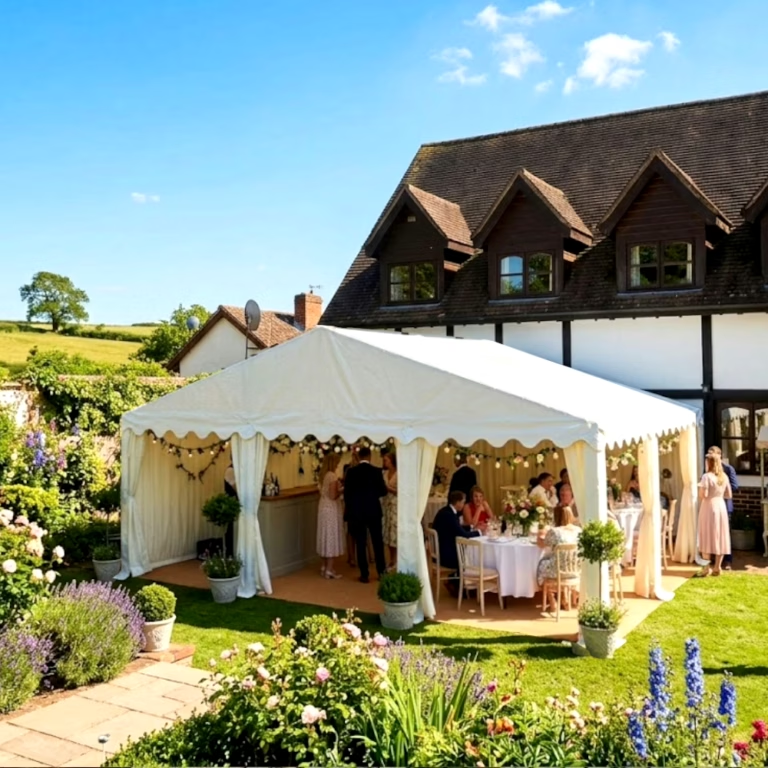 Buying & specsThe DIY Marquees Site Visit Checklist: 10 Things to Check Before You BuyAt DIY Marquees, we don’t just manufacture and sell industry-leading structures; we want to make sure your event goes off without a…3 min read · 7 May 2026
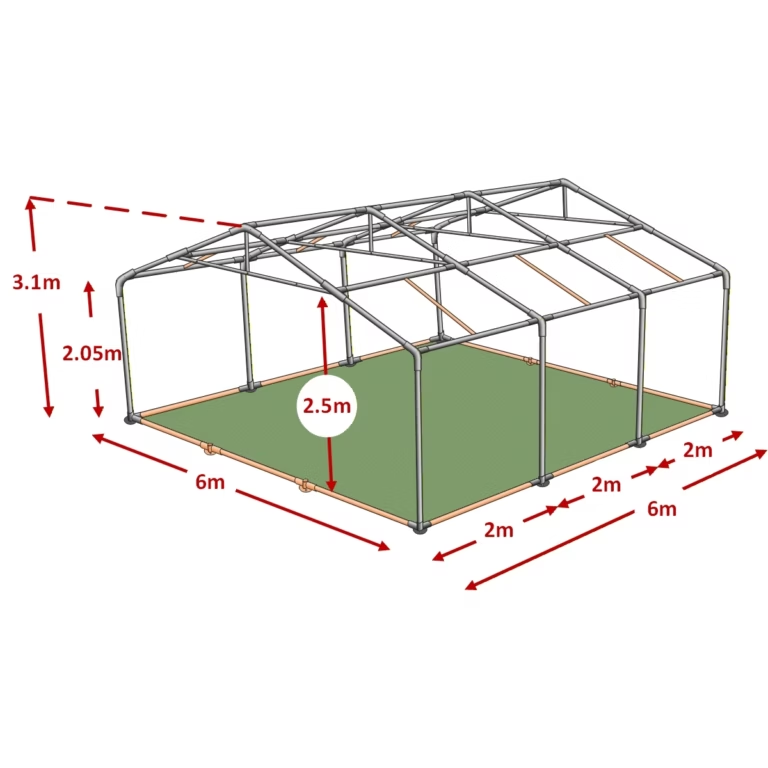 Buying & specsChoosing the Right Marquee: Classic vs. Commercial vs. Deluxe FrameworksWhen investing in a marquee, the strength, stability, and height of the structure come down to its skeleton—the framework. We offer three…2 min read · 9 Jul 2026Buying & specsHow to Turn One 6x12m Marquee into Five Different Hire SizesFor a marquee hire company, inventory is cash. The worst thing that can happen to your business is having expensive equipment sitting…3 min read · 6 Jul 2026